The Tourism Industry in Egypt
Stakeholders Tourism promotion and development bodies are the main pillar for the launch of tourism business, and the Egyptian legislator began thinking about the establishment of tourism promotion bodies in 1957. Regional tourism promotion bodies Presidential Decree No. 691 of 1957, as amended by Presidential Decree No. 191 of 1959, was issued to establish regional tourism promotion bodies, provided that a tourism promotion body should be established in each tourist governorate to study the governorate from the natural, commercial, historical and geographical points of view to exploit it for tourism, raise tourist awareness of the governorate and stimulate tourism using promotional methods, study the improvement or establishment of walks and resorts, and propose levying fees to activate tourism
General Authority for tourism development The General Authority for tourism development was established by the Republican Decree No. 374 of 1991 to follow the Ministry of Tourism and has the competence to develop plans for the development of tourist areas and supervise their implementation, the implementation of infrastructure projects in tourist areas, the management and exploitation of state lands allocated for tourist purposes. Supreme Council of Tourism. The first Supreme Council for Tourism was established by Law No. 447 of 1953. In 1975, Republican Resolution No. 148 was issued to organize the Supreme Council for tourism, then Resolution No. 810 of 1975 was issued to amend this system, and in 1985, Republican Resolution No. 226 was issued, which reorganized the Supreme Council for tourism and canceled the previous decisions issued on it. The council is formed under the chairmanship of the prime minister and with the membership of the minister of Tourism and several ministers and heads of relevant bodies. The council is specialized in proposing legislations and regulations and developing the necessary policies to promote tourism activities, finding appropriate solutions to the problems and difficulties that hinder the growth of tourist traffic in Egypt, coordinating between different ministries in the implementation of tourism development plans, evaluating the activity of the tourism sector and its achievements.
Chamber of travel and tourism companies and agencies: includes all establishments that carry out tourist business and services. Hotel facilities room: includes tourist hotels, B&Bs, rest houses, and furnished houses licensed to receive tourists. Tourist public shops room: includes public shops that receive tourists such as restaurants, casinos, amusement parks, buffets, cafes, and others. Ordinary shops and tourist goods include copper, leather, wood, handicrafts, and other antiques and souvenirs. Diving room and marine activities: includes all diving centers, marine activities, Safari yachts, and launchers.
Security Tourism security is the first step in promoting and marketing the tourist movement, to the extent that the country enjoys security stability, its share is determined by the rates of tourist movement.
The General Directorate of Tourism and Antiquities plan of the Egyptian Ministry of Interior. To fulfill the components of this task, the Department secures the movements of tourist regiments by paying close services to accompany tourist groups, insuring tourist and archaeological facilities and attractions, insuring tourist floats and Nile trips, combating tourist crimes that tourists may be exposed to and archaeological crimes, following up tourist companies and shops and receiving tourist reports against them, deploying police rescue vehicles that ensure the security presence of all tourist cities, ensuring the removal of cases of encroachment on antiquities. Due to Egypt's position in the Arab and African regions, and its location in the middle of a regional conflict zone, it was subject to several terrorist incidents, the most famous of which were the Luxor incident in 1997, the Cairo incident in 2005, the Sharm el-Sheikh incident in 2005, and the Dahab incident in 2006, which negatively affected the tourism sector during that period, but the tourism sector returned and regained its activity quickly during 2010 to achieve the highest annual tourism revenues.
Tourism cooperation
The images of Arab cooperation in the tourism field began with the spread of bilateral tourism agreements between a large number of Arab countries, which then turned into multilateral cooperation within the framework of the league of Arab states, and the Arab countries have concluded more than 40 eco-tourism agreements to support and encourage Arab Tourism, and these agreementswith different Arab countries, the most important provisions of these agreements are the exchange of tourism experiences, Information, statistics, training and qualification, in addition to unifying tourism laws and legislations, and establishing common foundations For services and tourist facilities, preservation of the environment and heritage, simplification of the procedure for the movement of tourists. . In October 2015, Egypt was elected as the head of the Executive Office of the UNWTO headquarters in Colombia.
Types of Tourism
God love Egypt has distinctive natural features that have made it a destination for tourists throughout the ages, it is famous for its cities, mineral and sulfur waters, its dry, moisture-free atmosphere and its sand suitable for treating many diseases, and it has many beaches of pristine nature far from pollutants, and archaeological monuments spread around it, to which fans from all countries of the world come. Thus, it has all the elements that put it on the world tourism map.
Recreational tourism, or Leisure tourism in Egypt attracts a large number of tourists from all over the world, due to the fact that Egypt has distinct beaches with a length of more than 3000 km on the White and Red coasts of Egypt, where tourists spend their holidays in what is known as beach tourism.In the Suez governorate, these areas are famous for clear waters, colorful coral reefs, rare fish, and the spread of practicing marine sports such as diving and snorkeling. As well as the establishment of camps and beach camps between the beach and the mountains, or camps and mountain trips, and tourist resorts that operate throughout the year are spread out. The city of El Alamein, in the North Coast region overlooking the Mediterranean Sea, also stands out as a promising tourist area due to its multiplicity of tourist villages stretching along the coastline. As for Nile tourism, it also attracts a remarkable number of tourists and captures their interest. Nile cruises and spending evenings on tourist steamers along the Nile River are an important tourist attraction, as several Nile steamers and floating hotels cross the Nile River lengthwise from Cairo to Luxor and Aswan and vice versa passing through all Upper Egypt cities overlooking the river, and have special marinas in each city to see its important landmarks separately.
Cultural tourism
Cultural tourism in Egypt is one of the most important tourist attractions, as it represents the most important and oldest types of Tourism, and because of the Pharaonic, Greek and Roman monuments available in Egypt, it has made entire cities open museums and contributed to the emergence of Egyptian museums of international standing, and lured archaeological expeditions and travelers to come to Egypt without interruption, fascinated authors and writers and was the source of inspiration for hundreds of books in different languages.
Museum of Islamic Art.
Among the most important cultural and archaeological tourist areas in Egypt are the pyramids of Giza, the Sphinx, the Saqqara area, the Dahshur area of Giza, the Roman theater, the Roman Baths, the temples of the black cape and Caesarion, the column of the mast and the citadel of Qaitbay in Alexandria. As for the city of Luxor, it is an open-air museum with a third of the world's monuments, the most famous of which are the Karnak Temple, the Luxor Temple, the valley of the Kings, the valley of the Queens and the city monastery. Aswan, in addition to being a hot spot for tourists for its warmth in winter, includes several historical and archaeological places such as the temples of Abu Simbel, Philae Island and nabatat island. Upper Egypt in general includes a number of historical monuments such as the temple of Dendera buqna, the medeon area in Beni Suef, Tell el Amarna in Minya, the Lahun pyramid, Al Hawara and Qasr Qarun in Fayoum. The seaward face includes the Wadjet Temple, The Hill of the two Pharaohs in dusuk, the city of fuh, the archaeological area of SA-Hajar in bsion and the monasteries of Wadi al-Natrun. And in Sinai there are such areas as Mount Moses and the monastery of St. Catherine. In the western desert, there are scattered areas such as the temples of hebes, Quetta and Al-Rayyan in Kharga, the tombs of Mut and taste, the village of Balat and the village of Qasr in Dakhla, as well as the city of Paris, the Farafra Palace and the Bahriya oases.
Museums are also spread almost in every governorate of Egypt and vary between National, Art and regional museums, and mostly each museum specializes in displaying antiquities that belong to a particular era or era, such as the Egyptian Museum, the Museum of Islamic art, the Museum of modern Egyptian art, the jewel Palace, the Manel Palace, the Greco-Roman Museum, the Nubia Museum, the Museum of Fine Arts, the Coptic Museum, the Agricultural Museum, The War Museum, the El Alamein Military Museum and the sunken Museum, in addition to the huge museums that are still under construction, such as the Grand Egyptian Museum in the desert of the pyramids and the Museum of civilization in Fustat, which they will represent a qualitative and cultural shift and a significant addition to Egypt's cultural history and archaeological heritage, including It will include a huge number of artifacts, museum display methods and modern restoration laboratories.
Eco-tourism in Egypt has several rare ecological sites that attract visitors wishing to learn about its natural and wild components.
Medical tourism There are many hot springs and springs with mineral and sulfur waters in Egypt, which vary in depth, capacity and temperature, and their waters contain several mineral salts and some minerals of therapeutic value such as sodium carbonate, magnesium and iron, and laboratory measurements have shown the suitability of the salinity ratio in these natural water resources for therapeutic purposes. In addition, the hospital areas enjoy a dry climate, moderate temperature and humidity, and the sand and silt it contains are suitable for healing from several diseases, such as rheumatic and skin diseases, bone diseases, digestive and respiratory systems, and the spread of herbs and medicinal plants on its land, from which drugs, vegetable and aromatic oils are extracted. Many areas enjoy the advantage of medical tourism in Egypt, such as Helwan, Ain Elsira, Ain Sokhna, Hurghada, Fayoum, the oases of the Western Desert, Wadi el Natroun, Aswan, Safaga, and Sinai
Sports tourism
Sports tourism in Egypt is one of the important means of promoting and attracting tourists, and Egypt has a strong infrastructure in several sports such as football, handball, volleyball, squash, equestrian, golf, sea sports, fishing, bowling, which qualified it to host several international and continental tournaments, attracted many visitors from different countries to attend its events and enjoy watching their athletes and sports teams, Egypt hosted the African Cup of nations football in 1959, 1974, 1986, 2006 2019, and it has hosted the African men's Handball Championship for five times, the last of which was in 2016, while in November 2015 it won the right to host the 2021 World Men's Handball Championship, and won The right to organize the African Cup of Nations men's Volleyball Championship in 2015, and it was entrusted with organizing the world youth volleyball championship for Under-23 men, scheduled for 2017, and Egypt organizes the Egypt international marathon in Luxor, the Pharaohs rally race, which starts from the north coast to the Giza Pyramids area, and the pyramids International Squash Championship, and also succeeded in organizing the World Squash Championship for the first time in December 2015.
Festival tourism
The most important of these gatherings are the tourism and shopping festival, the World Tourism Day Festival, The Sun perpendicular Festival at the Abu Simbel Temple, the annual celebration of the discovery of the Tomb of Tutankhamun in Luxor, the Cairo International Folk Song Festival, the Cairo International Film Festival, the Alexandria International Film Festival, the International Festival of documentary films, the Ismailia Folk Arts Festival, the Cairo International experimental theater, Cairo Arab Media Festival, festival The feast of the fulfillment of the Nile, the International Fishing Festival in Port said, the International Equestrian Festival.
Conference tourism Conference and exhibition tourism represents an important tourism pattern in Egypt because of its privileged geographical location and political status, which enabled it to host dozens of international conferences annually in the political, economic, cultural, medical and professional fields.The holding of these conferences is concentrated in Cairo, Alexandria, Sharm el-Sheikh, Hurghada and Ismailia because of the availability of international conference centers in these cities with technical and technological capabilities and modern equipment such as audio equipment and interpretation in various languages made it a desirable kiss by the organizers of international conferences, and the Egyptian General Authority for exhibitions and conferences represents the authority responsible for organizing and hosting conferences and exhibitions inside Egypt. Egypt has succeeded in organizing several successful international conferences such as the conference to support and develop the Egyptian economy, the Cairo International Book Fair, and hosting many international conferences, including the first international tourism exchange called the Mediterranean exchange, the first international conference of Mediterranean businesswomen, the conference of the Union of tourism companies and organizations of Latin American countries "cotal", the conference of the General Union of travel agents and Italian tourism companies "viavit". Two years ago, she also won the IMAX 2012 exhibition award in Germany for "incentives and conferences"tourism.
Religious tourism
Egypt is full of many holy religious places, whether Jewish, Christian or Islamic, to which hundreds of visitors come in what is known as religious tourism, and the monuments and shrines of the three heavenly religions are spread, including historical Islamic monuments such as the Hussein mosque, Ibn Tulun mosque and Al-Azhar mosque, and many buildings and castles that record the Islamic history of Egypt, including Salah al-Din Castle in Cairo, qaytbay Castle in Alexandria and Nakhl Castle in Sinai. As well as ancient Christian sites that record the path of the Holy Family, such as the Church of St. Sergius, to which the Holy Family took refuge during its refuge in Egypt, the Hanging Church, the monastery of St. Catherine, the monastery of St. Anthony, the founder of monasticism, the monastery of St. Paula on the Red Sea, the monastery of dronka in Asyut and many other monasteries and ancient churches. It is also home to several sites of Jewish religious significance, such as Mount Moses in Sinai, Ben Ezra Synagogue, Shaare shemayim synagogue in Cairo, Eliyahu Hanby synagogue, and Eliyahu Hazan synagogue in Alexandria.
The ancient city of Thebes and its Necropolis
The ancient Egyptians. The city witnessed the Egyptian civilization in its heyday, and there are about 14 of the most important ancient Egyptian temples, including the Karnak Temple, Luxor Temple, Hatshepsut temple, the valley of the Queens and the valley of the Kings, which has 63 tombs between the royal tombs and the tombs of nobles or senior officials, which is the site chosen by the Kings of the Eighteenth Dynasty of the modern state to be the sacred place for their tombs, and only the Tomb of the Golden Pharaoh Tutankhamun was revealed in this valley by Howard Carter on November 4, 1922, and also revealed in the valley other royal tombs the first cemetery to be excavated in the valley was the Tomb of Queen Hatshepsut. The city is currently called Luxor and is considered a first-class museum city, and the UNESCO committee decided to include it in the World Heritage List in 1979.
Islamic Cairo
Old Cairo is one of the oldest Islamic cities in the world, with its mosques, schools, baths, and springs. The city was founded in the X century and became the center of the Islamic world, and reached its golden age in the XIV century. Historical Cairo includes types of high-style buildings such as schools, agencies, khanqawas, basbils, baths, houses, and archaeological palaces such as Bayt Al-Suhaimi and the palace of Prince Beshtak, markets al-Fotouh, which were formerly closed in the evening to maintain security and order. The city also hosts a huge number of ancient mosques, including the Amr ibn al-Aas mosque, which is the first building erected in Fustat, the Ibn Tulun mosque, which is the third mosque established in Egypt after the Amr ibn al-Aas mosque and the Al-Askar mosque and began its construction in 876 and completed its construction in 879, while the Al-Azhar mosque is the first Fatimid architectural work contemporary with the founding of Cairo and has survived until today and was established by the Sicilian in 972, during the reign of Caliph al-Zafer by the command of Allah, the Al-Hussein mosque was built in 1154.
Landmarks of Nubia from Abu Simbel to Philae
Landmarks of Nubia are one of the ancient Egyptian landmarks of a distinctive character, which includes the temple of Abu Simbel, which was completely carved inside a rocky mountain in southern Egypt, and built by Ramses II to commemorate his victory in the Battle of Kadesh. The temple has been lying for thousands of years on the western shore of the Nile River, more than 1200 km from Cairo and 290 km southwest of Aswan.over time, desert sand began to creep over its statues until it almost covered them. in 1813, It was rediscovered. less than 150 years after its restoration, it was threatened by the waters of Lake Nasser, which would have completely flooded it upon completion of the construction of the High Dam. the world moved to save one of the most important World Monuments, which UNESCO considers a very important cultural landmark. Planning for the rescue of Abu Simbel began in 1963 to represent the largest archaeological rescue project in history, and the project began on October 10, 1965 by moving the entire temple after cutting and reinstalling it in another safer place, and the last piece of the temple was lifted in April 1966, the process of cutting and reinstalling at the time of the project cost 40 million dollars, Egypt paid a third and the United States a third while the last third were donations from the peoples of several countries. The implementation was supervised by German engineers while the Labor was completely Egyptian, and the transportation process was carried out with extreme precision and used manual methods of cutting stones, while mechanical cutting was used on the outer body of the mountain by applying very precise standards with a cutting thickness of 6 ml. this process resulted in five thousand pieces, the temple to be the same as its old form. The temple was reassembled from the inside and the statues were installed in a way that does not depend on the use of any stickers that can show the effects of cutting through the overlapping technique using the stone protrusion that was retained during cutting while the rest of the stones were stacked in the same old order to complete the construction of the temple completely as a structure. regarding its containment with the mountain, the engineers built a concrete dome covering the entire temple to place the mountain stones on top of it to give the previous shape while ensuring the protection of the temple from any external loads.
St. Catherine's district
The Orthodox monastery of St. Catherine is located at the foot of Mount Horeb, mentioned in the Old Testament, where Moses received the tablet of commandments, and is the site that Muslims also revere and Call Mount Moses. The region is sacred to the three monotheistic religions of Christianity, Islam, and Judaism, which are spread all over the world. The monastery was founded in the 6th century and is the oldest Christian monastery that has preserved its basic function. The walls of the monastery and its buildings have a Byzantine geometric character. And in the monastery, there is a library with a large collection of ancient Christian manuscripts and icons. It is located in an area with many heritage and religious sites and monuments. The monastery attracts tourist groups from all over the world, and it is managed by the abbot of the monastery, the bishop of Sinai, who is not under the authority of any patriarch or Holy Synod, but he has close relations with the patriarch of Jerusalem, so his name is mentioned in the liturgies, and the monks and priests of the monastery are Greeks, not Arabs or Egyptians, like the bishops of the Greek Orthodox Church in Jerusalem, which is controlled by the Greeks for long periods. The UNESCO committee decided to include the area in the World Heritage List in 2002.
Valley of the Whales
The valley, with its number, concentration and unique quality of fossil remains, is an open museum, and these fossilized remains represent one of the most prominent stations of the evolution of whales from land mammals to marine mammals, and it is the largest sites in the world witnessing this stage of evolution, reflecting the nature of whales and their life during their transformation. In July 2005, UNESCO decided at a meeting of the World Heritage Committee hosted by the city of Durban, South Africa, to register the area in the list of nature reserves as the first Egyptian natural site to be registered in the list as a world natural heritage, because the discovery of the Valley contributed to helping scientists to know the stages of the evolution of the life of this mammal, which has transformed over the years from a land organism to a marine organism.
Tourist destinations
Greater Cairo, with its governorate (Cairo, Giza, Qalyubia), is a first-class tourist site where there are many tourist attractions that visitors come to from inside and outside, and hundreds of tourist attractions from different eras are located on its territory, the number of which may exceed that of an entire small country. The pyramids of Giza and the pyramid of Djoser are the most famous pharaonic monuments, and the Cairo Tower stands out as a distinctive sign of the city. Among the most famous palaces in Cairo are the Mohammed Ali Palace in Shubra Al-Khaimah, the Prince Mohammed Ali Palace in Manil, the Baron Empress Palace, the Saffron Palace, the Prince Beshtak Palace, and the Prince Taz Palace. And the historical presidential palaces, which include the Federal Palace, the Dome Palace, the Tahira Palace, and the Abdeen Palace. While Old Cairo embraces historical Gates and ancient buildings such as Salah al-Din Castle, Bab al-Futuh, Bab al-Nasr, Bab zuweila (Bab al-Metwali), Bayt Al-Suhaimi, Bayt Zeinab Khatun, Bayt al-Kritliya, the way and book of Abdul Rahman Katkhada, the way of Muhammad Ali, Khan al-Khalili, and the fortress of Babylon. This is in addition to the museums, which number dozens, mainly the Egyptian Museum, the Museum of Modern Egyptian Art, the Museum of Islamic Art, the War Museum, the Islamic Museum, the Coptic Museum, and the open-air museum in Mit-Rahina. In addition to artistic and cultural venues such as the Egyptian Opera House, the House of Books, and national documents, the Maspero building, and sports facilities such as the Cairo International Stadium.
Among the most famous historical mosques in the city are Al-Azhar mosque, Sultan Hassan mosque, Hussein Mosque, Al-Zahir Barquq Mosque, Al-Zahir Baibars Mosque, Al-Hakim Mosque in Amr Allah, Ibn Tulun Mosque, Al-Rifai mosque, Amr ibn al-Aas mosque, Muhammad Ali Mosque, Al-Aqmar Mosque, Al-Ghouri Mosque, Al-Muayyad Sheikh mosque, Qani Bay Al-Rumah mosque, Mahmudiya mosque, Nasser Qalawun School, and Al-Mansur Qalawun School. Cairo is also a center of Coptic Antiquities, which includes the Hanging Church, St. Mark's Cathedral, the Church of the Virgin Mary, the Church of St. Abu Sarja, and the Church of St. Barbara. Around Cairo, several recreational parks on vast areas are accepted by adults and children alike, including Al-Azhar Park, Al-Azbakiya Park, International Park, Japanese Garden, Orman Park, Giza Zoo, Pharaonic Village, and Cosmic Village.
Alexandria
Alexandria has many cultural and archaeological tourist destinations, including the mast column, which is one of the most famous monuments in the city, and is the highest monument in the world.
the glories of the ancient library of Alexandria, which was a beacon to the world for about two thousand years. And the Alexandria Opera House or the Sidi Darwish theater, which was built in 1918 and opened in 1921. In addition to the archaeological tombs, which include the archaeological tombs of Mustafa Kamil, dating back to the Greek and Roman times. The archaeological tombs of Anfushi in the Bahri area west of Alexandria date back to the third century BC in the late Ptolemaic and early Roman era. The archaeological tombs of Kom Al-shukafa in the Kom al-shukafa area south of the onion Mina neighborhood, which is due to its importance due to its breadth, its many decorations and the complexity of its planning, and it is also one of the clearest examples of the overlap of Pharaonic art with Roman art in the city and the finest examples of funerary architecture. And the archaeological Shatibi tombs, which date back to the end of the second and the beginning of the third century BC. The city also includes several museums, represented by the Alexandria National Museum in the city center, which includes more than 1,800 artifacts representing all the eras that the city has passed through from the Roman era to the modern era. The Greco-Roman museum, which displays a wide variety of antiquities found in and around Alexandria, mostly antiquities from the Ptolemaic era and the subsequent Roman era. And the royal jewelry museum, which displays the jewelry of the royal families that ruled Egypt.
The museum and Institute of Aquatic Biology, which was established for the scientific and technical supervision of Fisheries and the study of the biology of the Egyptian seas and lakes, includes a rare mummified and living collection of various fish and aquatic life. There are also several archaeological palaces in the city, including the Montazah Palace, one of the royal palaces built by the Khedive Abbas Helmy II in 1892, and the Ras El-Tin Palace, which is the oldest palace in the city, and the palace is currently one of the presidential palaces in Egypt.
It is home to a number of the most important Greek Orthodox churches, namely the Church of St. Anthony (St. Anthony), the Church of the Archangel Michael and Gabriel, and the Church of St. Catherine (St. Catherine). It is located in the archaeological area of Abu Mina, which is one of the world's heritage sites. Due to the coastal nature of Alexandria, a huge number of Egyptians and foreigners come to it to enjoy the beauty of its beaches in summer, which visitors are allowed to enter for free in some of them and for an entrance ticket in others, and from the famous beaches of Alexandria, Miami, Glim, Hanovil, Meks, Abu Haif, Sidi Bishr, Mandara, Asafra, Bitash, Stanley. The city also includes several distinctive public parks such as the Royal Park gardens, Waterfall Gardens, Antoniades Gardens, Picnic Zoo, and the International Park.
South Sinai
The governorate of South Sinai represents the heart of recreational tourism in Egypt, with its cities to which tourists come from everywhere for entertainment, spending holidays and enjoying the beauty of nature, especially Sharm el-Sheikh, which embraces the bays of the Red Sea with its natural possibilities and climatic features, including Shark Bay and Naama Bay, which is the heart of the city, where there are many restaurants, cafes, commercial markets, international hotel chains and resorts, and the city is famous for practicing marine sports such as fishing, swimming with colorful fish, watching coral reefs, diving, sailing water. It is also dotted with reserves and islands that are considered rare diving areas, represented by Ras Mohammed Reserve, Nabq Reserve, Tiran Island, Sanafir Island,The city of Dahab is also one of the important tourist destinations with its prominent tourist places represented by the Abu jalloum Reserve and the bluehall area, which is one of the world-famous diving places, the canyon area, which is one of the excellent diving areas, coral island, where the remains of a historical fortress built by the Crusaders are located, the AL-melil area, which is a road parallel to the coast road, which includes some small hotels, cafeterias and houses, the Masbate area, which is the main tourist commercial area in the city, the mashraba area, which includes a large number of cafeterias and diving centers, and also the only trace located there is the mashraba Hill, which is Stores for one of the old ports, and Dahab two bays are Laguna or Gazala It is characterized by the presence of the only sandy beach in the city and Al-Qura, which is located in the center of the city, in addition to the resorts stretched along its beaches, which merge with the surrounding nature with stalls made of wood and palm trees intended for tourists to stay. Nuweiba is also famous for its wealth of wonderful tourist attractions and the charming Bedouin desert nature, interspersed with caves and plains embedded in the calm waters of the Red Sea and with many valleys that form unique pieces of art such as Wadi Al-shawashi or Wadi Gharbah. Nuweiba is full of deep and shallow dive sites suitable for diving professionals and beginners. Among these distinguished sites are the T-reef site, the Abu Lulu or Hilton House area, the Umm Raisher site, the boakki site, and the Ras Sheitan camp is one of the important landmarks of the city. The city also includes several archaeological monuments, including Nuweiba Castle, Al-turabeen Castle, and the Nawamis collection
The Red Sea
The city of Hurghada destination for a large number of foreign nationalities. Due to the nature of the coastal city, it has become a global destination for leisure, recreation, and marine sports tourism, and in 2015, it won the best Arab tourist destination award and was chosen to be the regional headquarters of the Arab Tourism Organization. The city enjoys a special place in the hearts of diving and water sports enthusiasts because of the proliferation of diving sites, islands, coral reefs and rare fish on the coasts and borders of the city, including Belinda reefs, Abu qatraa reefs, Abu Nahas reefs, Umm ish reefs, Umm Qamar reefs, orouf reefs, Tawila reefs, Abu naqad and Seoul. There are many resorts and tourist yacht ports in several areas and on large areas, including Soma Bay, Makadi Bay, Sahl Hasheesh, El Gouna, magawish, and its artistic and tourist attractions include the desert outlet, the Mina mosque, the mausoleum of Abu Hassan al-Shazli, the monastery of St. Anthony, the monastery of St. Paula, the Cathedral of St. Shenouda, the monastery of Marmina, hundreds of hieroglyphic tablets are scattered in the Hammamet Valley, located in the city also, the National Institute of marine sciences and Fisheries, the Grand Aquarium or the aquarium museum, and the city of Marsa Alam is one of the world tourist destinations with its outstanding resorts Port Ghalib, which ranked 24th out of 41 tourist destinations nominated by the New York Times as the best tourist destinations to visit during 2011 around the world, for its tranquility and beauty of nature far from pollutants and the resort's luxury accommodation options represented by international tourist hotels, a golf course and a yacht club, residential buildings, commercial complexes and entertainment venues, and an international Marina that won for five consecutive years the title of the best Egyptian tourist port.
North Coast
The northern coast stretches for a distance of 1050 km from the city of Rafah in the east to Salloum in the West in the far north of Egypt on the Mediterranean coast, and is characterized by its blue waters and soft golden sand. unlike the Red Sea coast, the northern Egyptian coast does not have mountains or Highlands, and its land is characterized by a plain dotted with some plants and short grasses. However, the phrase north coast in Egypt is generally used to refer to the western region of the north coast from the city of El Alamein to Marsa Matrouh,
The city of El Alamein is an international tourist destination, especially for the countries that participated in the Second World War, where the remains of the victims of the First and Second Battles of El Alamein, which took place between the forces of the Allied countries and the Axis, lie on its territory. The graves are divided between the Commonwealth cemetery, which contains the remains of 7,367 victims from Britain, New Zealand, Australia, South Africa, France, India, and Malaysia, the Italian cemetery, where the remains of 4,634 soldiers lie, and the German cemetery, which contains the remains of 4,280 soldiers. The El Alamein Military Museum and the El Alamein Marina museum are also located in El Alamein, while the high-end tourist resorts that are Dora and the heart of the Egyptian north coast are spread out, including the Marassi resort in Sidi Abdel Rahman area, and the Marina tourist area, which includes several tourist products, the most famous of which is Porto Marina, and includes hundreds of summer residences, chalets, several restaurants, hotels and a commercial center, and currently represents one of the most prominent Egyptian summer tourist resorts and the most popular for its abundance of entertainment and comfort besides the charming natural qualities. A huge number of expats enjoy the beaches of the city of Marsa Matrouh, the most famous of which are Matrouh public beach, Rumaila, Turquoise, al Awam, Lido, Gram, Cleopatra, Mina Hasheesh, Rumaila, White, Aseel, and Agiba.
El Nouba
Monuments and tourist attractions are scattered in the cities of Nubia, where there is hardly a place without sights of ancient Egyptian civilization. Along Upper Egypt, historical temples, pyramids, monasteries, mosques were built, and more recently, museums were built to preserve and display the ancient Egyptian heritage. In Suhag is located the temple of Seti I or the temple of Abydos, the temple of Ramses II, which includes the statue of meritamun, the red monastery,n addition, the Amarna Hill area, which represents the capital of Egypt during the reign of King Akhenaten, the Beni Hassan archaeological area, the tuna mountain area, the ashmounine area, the city of Hermopolis, the cemetery of bitosris, the Meloy Museum, the Meloy church, the Abdul Majid Pasha Palace, the fortniya Palace. The temple of Dendera, the temple of Al-Heita, the temple of Qus, the ruins of Nag Hammadi, and the temple of Qafat are located nearby. The monuments of Abusir, the area of the monuments of Mudal, Deir el-Hamam, and the Great Mosque instead of dlas. In the south of the Nubia region, Luxor city stands out as an icon of ancient Egyptian cities and as an open-air museum, and its most famous landmarks are Luxor Temple, Karnak Temple, Hatshepsut temple, ramsium temple, Habu City temple, the tombs of the valley of kings and Queens, Luxor Museum. While the city of Aswan represents the heart of the natural and archaeological beauty of the region with its Nile islands and its impressive archaeological monuments, most notably Elephantine Island with its magnificent gardens and precious artifacts, Philae island, which separates the Nile River into two channels and was built on the temple of Philae, which was transferred to Angelica island, ISIS island, Aga Khan mausoleum inspired by Fatimid architecture in Cairo, Lake Nasser, which is the largest man-made lake in the World, Abu Simbel temple, built by Ramses II the temple of Beit El-Wali and the kertasi kiosk, the temple of Wadi el-Sibu, the temple of El-dur and the banut cemetery, while the Nubia museum appears as a distinctive sign of the city, which was built to preserve ancient Egyptian antiquities and display them in a modern and scientific way.
Oases of Egypt
God bless Egypt with quite a few oases that still retain their splendor and natural beauty far from the hustle and bustle of the city, including springs, wells, trees, valleys, plateaus and the charm of desert nature, and the natural eyes scattered in the oases are filled with warm sulfuric waters suitable for hospitalization from rheumatic diseases, and visitors come to them from safari enthusiasts and singing Bedouin evenings. To enjoy and see the natural and tourist attractions in Siwa Oasis are the ruins of the Shali Palace, the temple of Revelation visited by Alexander the Great, the temple of Amun, Fayoum Oasis includes Wadi Al-Rayyan, Wadi Al-Hitan, Qarun Reserve, Qarun Palace, Qasr Al-Sagha, Umm Al-bureijat archaeological area, Umm Al-Athel area, Kranis archaeological ruins, the ruins of Dimiya al-Saba, the tombs of Al-Lahun, the pyramid of Al-Lahun, the pyramid of Hawara, Deir al-Azab, the seven suwaki. Kharga Oasis is an ideal place for an interesting safari trip in the Western Desert, visiting ancient Egyptian places such as the temple of hebes, the temple of dosh, the tombs of the pagodas, Deir El Kashef, labkha Palace, dapshiya, Umm el dabadib Castle, Deir Munira, Nadura temple, Qasr el Zayan temple, the archaeological Church of peace, the archaeological Cemetery of Prince Khalid, the Museum of Antiquities of the New Valley. Dakhla oases are one of the most attractive Egyptian oases for tourists, and it alone contains more than 500 hot springs such as the tarfawi well and the mountain well, along with the remains of medieval cities such as the villages of Qasr and Balat, and Ain el Sabil, and the Oasis is located in the middle of the city of MUT, which dates back to pharaonic times. The Farafra Oasis is characterized by isolation in the Western Desert, which is predominantly white thanks to its wonderful chalky rock formations, and its desert is dotted with Crystal mountains and rocks that feed several familiar shapes. It is also home to the Badr Museum, the Farafra Palace, the BIR Sita hot springs, and the AL-Mufid Lake. The Bahariya oases stretch over a vast area of the desert, which is surrounded by Black Hills of quartz stones, known as the Black Desert. It also includes a large number of amazing places such as the Ptolemaic tombs, the Al-buwayti Museum, Jebel al-DAST and Jebel Maghraf, black mud, and Salt Lake.
Crises and negative influences: The impact of terrorist incidents. Security threats have had a continuous impact on the Egyptian tourism sector over the last twenty years. Where 58 foreign tourists were killed in 1997 in the Luxor incident, while the Sinai incident claimed the lives of 32 people, mostly foreigners in 2004, the Cairo incident in 2005 resulted in the death and injury of several foreign tourists in the center of Cairo, the Sharm el-Sheikh incident in 2005 caused the death of 88 people,
Egypt is one of the oldest civilizations in the world. The first emergence of civilization is placed around the year 6,000 B.C. The history of ancient Egypt has traveled a full complimentary 3,000 years and is divided into the Old Kingdom, Middle Kingdom, and New Kingdom of Egypt history, which is, in turn, divided into 30 dynasties. Considered one of the best tours in Egypt in the world, in fact, it's a destination for many tourism seekers, thanks to a geographical location; it's situated in the middle of the world, with summer and winter climates, beautiful coastlines, and beaches full of rare coral treasures.
With mosques, temples, museums, and artistic buildings, Egypt is rich with abundant tourist attractions—the works. The winter season is the best in this regard, for one gets to enjoy the warm blessing of Egypt and all the charm around Easter time in wintertime.
Egypt is characterized by unique geographic isolation, which helped the country throughout the ages to have its own characteristic civilization, thanks to its location in the northeastern corner of Africa, and extends to the Asian continent by the Sinai Peninsula, the Libyan borders, and the Western Desert to the west, the Red Sea to the east, the Mediterranean to the north, and Sudan. Which was part of the Egyptian Kingdom, from the prehistoric era until it finally became independent after the Egyptian revolution of the 23rd of July in 1952—to the South.
Let's talk now about the most attractive places in Egypt to be visited. First, of course, will be Cairo, the capital, the most important; you can enjoy the best tours in Cairo, and many wonderful places to experience. It is also famous for its popular atmosphere and nightlife, where cafes and Nile Cornish are full of visitors coming to enjoy watching the Nile in the evening, as well as Cairo Day Tours, which is best known for the most luxurious hotels and the best prices, which are suitable for all kinds of travelers.
The Pyramids of Giza:
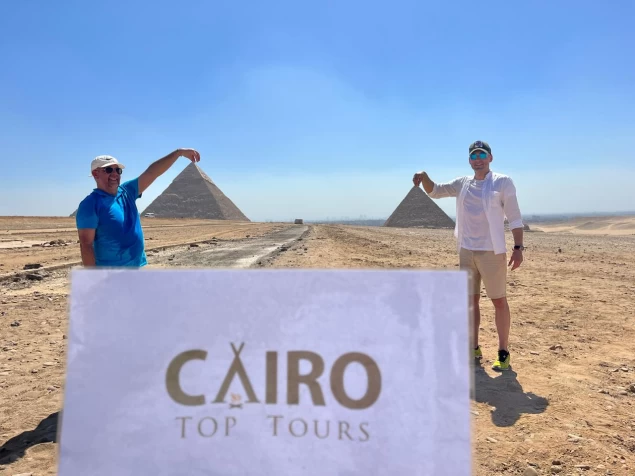
The Pyramids of Giza are considered the seven wonders of the world. They are built on the Giza Plateau, just outside the city of Cairo. This pyramid complex consists of three great pyramids, namely the Pyramid of Cheops, the Pyramid of Chephren, and the Pyramid of Mycerinus, which are tombs. Each of them has the name of the king who built it and was buried along with the Great Sphinx. It's a statue of a legendary creature with the body of a lion and the head of a human. The statue is in front of the pyramid of Khafra, which is the middle pyramid.
Saqqara is an ancient burial ground serving as the necropolis for the ancient Egyptian kings and noblemen as well. Saqqara features numerous pyramids, including the world-famous Step Pyramid of Djoser, sometimes referred to as the Stepped Tomb due to its rectangular base, as well as several mastabas called the tombs of the nobles (Arabic word meaning 'bench'). Located some 30 km (19 mi) south of modern-day Cairo, Saqqara covers an area of around 7 by 1.5 km.
The Step Pyramid is the most important monument to see during any Cairo Day Tour. It is considered the famous structure in Saqqara, dating from the third dynasty (2667—2448 B.C.), and was the first complex ever built entirely out of stone. It also displays an important architectural innovation for the construction of the Giza Pyramids and other later pyramids in the fourth dynasty and later. as it is the first stone pyramid made of 6 mastabas or steps and is sometimes referred to as the Step Tomb due to its rectangular base.
Khan El Khalili:
Khan El Khalili is a market that includes exhibits of handicrafts such as copperware, wood crafts, and other antiques. The market also includes many famous libraries in addition to the famous Fishawi cafe. Also, you can take a look at Cairo Tours and enjoy the old (Mashrabiyat), which is an element of traditional Arabic architecture used since the Middle Ages up to the mid-20th century, usually used on the street side of the building. However, you can't finish your tours in Egypt without buying some souvenirs of incense imported from Sudan, papyrus-bearing drawings, and hieroglyphic words and amulets.
The Egyptian Museum in Cairo:
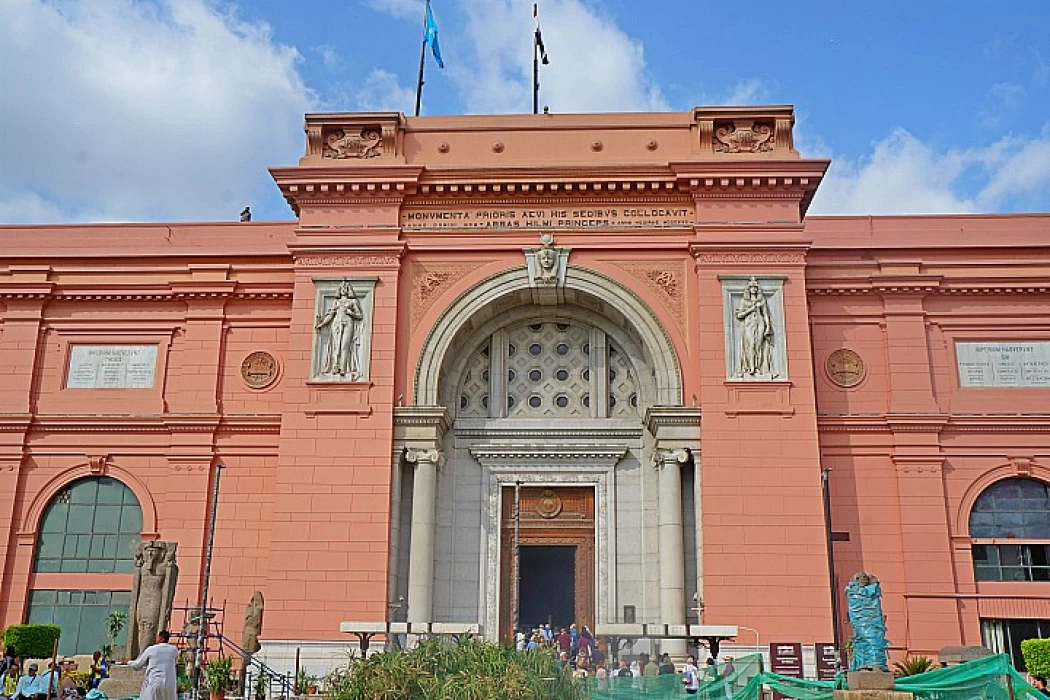
The Egyptian Museum in Cairo is one of the unique museums that contain a lot of antiquities, and it is in downtown Cairo (Tahrir Square), and also one of the oldest and most popular museums in the world, which is included in most of Egypt Day Tours. It comprises two floors; the ground floor hosts huger displays such as coffins, stone carvings, and huge statues. It also contains more than 160,000 rare artifacts, mummies from the pharaohs of Egypt. You can visit the museum and enjoy our best tours in Cairo, seeing the view of the magnificent facade of the museum designed in French style, decorated with marble paintings of the most famous archaeologists in the world, and on the sides of the door there are two statues of two Roman-style women. You can see the indoor halls and the high walls, enjoying the natural light that enters through the glass panels on the ceiling and from the windows on the ground floor.
Coptic Cairo:
Coptic Cairo is a part of Old Cairo that encompasses the Babylon Fortress, the Coptic Museum, the Hanging Church, the Greek Church of St. George, and many other Coptic churches and historical sites included in Egypt Excursions. It is believed in the Christian tradition that the Holy Family visited this area and stayed at the site of Saints Sergius and Bacchus Church (Abu Serga). That's why people planning their Cairo Day Tours make sure this part of Old Cairo is seen. Coptic Cairo was a stronghold for Christianity in Egypt until the Islamic conquest of Egypt, though most of the current buildings of the churches in Coptic Cairo were built after the Muslim conquest of Egypt in the 7th century.
Can we also talk about the Ben Ezra Synagogue? was established in Coptic Cairo in 1115, in what was previously a Coptic church that was built in the 8th century. The Copts needed to sell it in order to raise funds to pay taxes to Egypt's ruler, Ibn Tulun.
Islamic Cairo:
Islamic Cairo can be an impossible task to finish on a one-day tour of Cairo. It is quite a large area that has many historic districts because it is still very much a living part of the city and is visited during all Cairo Day Tours. Here we have the largest outdoor museum of Islamic art, called El-Moez Street. This street was the main street throughout the city when it was built during the 11th century, and mosques, madrasas, Sabils, mausoleums, and palaces were constructed here. The northern part of the street (between Bab El-Fotouh and Al-Azhar Street) was recently restored. This is one of the most picturesque parts of Cairo. The Qala’un Complex here is one of the most impressive in Cairo.
Ibn Tulun Mosque is within walking distance of both the Citadel of Saladin and the mosque of Sultan Hassan. built in 872 AD, it is the oldest standing mosque in Islamic Cairo and the largest by land area. It is a truly impressive space, owing to its unique Samarran architectural style.
We also have the famous El-Azhar Park, which has been added recently to Islamic Cairo. In the 1990s the Egyptian government reclaimed land that had been used as a landfill for centuries to create a beautiful park for the city.
The Citadel of Saladin is the iconic picture of Islamic Cairo that was built by Salah El-din El Ayouby at the end of the 12th century. He was a famous king and leader, as well as the founder of the Ayyubid Dynasty. The Citadel is an indispensable part of all Cairo Day Trips when you travel to Egypt and also one of the must-do things in Cairo, and you will have the chance to experience those when booking Egypt Excursions.
Now we will move to the second capital of Egypt and one of the most beautiful cities in Egypt, in the Mediterranean basin, nicknamed the bride of the Mediterranean Sea, a city full of life and containing many important landmarks, including the largest ports of Egypt in the Mediterranean area and abounding with many tourist places in Egypt, like:
The Bibliotheca Alexandria is the most famous library of classical antiquity. It formed part of the research institute at Alexandria in Egypt, which is known as the Alexandrian Museum.
A reimagining of Alexandria's ancient Great Library, The Library of Alexandria is a gorgeously designed cultural center that contains a host of museums as well as one of the modern world's most ambitious libraries, and it has to be visited during Egypt Day Tours. Its architecture—a giant sun disk—presides over the waterfront Corniche.
The Citadel of Qaitbey, When you visit Alexandria, which is incorporated with Egypt Excursions, you should walk the long seafront boulevard towards the west, and you'll finally arrive at the Fort of Qaitbey. It could be a smaller replacement of the previous Pharaoh's Lighthouse, one of the seven man-made wonders of the ancient world—but this garrison has been protecting Alexandria's eastern borders since 1477 AD. The Pharos Lighthouse began to vanish due to a destructive earthquake that hit Alexandria in 1303 AD. Fort Qaitbey was built by Mamluk Sultan Qaitbey in order to fortify this significant Egyptian harbor from invasion, and rubble from the tumbled lighthouse was used in its structure. Inside, you can see the range of stone-walled cells and ascend to the rooftop to get an incredible view of the Mediterranean.
The Roman Amphitheater is located in the center of Alexandria in the famous Kom Eldikka square. Nobody thought much of the ancient rubble mound in central Alexandria until, in 1947, they decided to clear the site to make way for new housing. Instead, the area known as Kom el-Dikka ("Mound of Rubble") revealed a whole swag of ancient ruins, including a small Roman theater.
The Greco-Roman Museum is a museum in Alexandria, Egypt. It displays a wide variety of monuments found in and around Alexandria, most of them from the Palatine and later Roman eras. Opened to visitors in 1892.
The Catacombs (Kom El-Shoukafa) are situated just to the west of Pompey's Pillar. The Catacombs of Kom El Shuqafa, considered the largest and most important burial site in Egypt, are visited regularly during Egypt Day Tours. As well as being the most important Greco-Roman necropolis in Egypt, the Catacombs of Kom El Shuqafa have a mixture of Roman, Hellenistic, Pharaonic, and ancient Egyptian decorative art, elements that were all common during this period in Alexandria.
Luxor was the capital of the new kingdom in ancient Egyptian history, which was remarkable for its huge temples and gigantic attractions. Similar to the old kingdom, the temples were built on the East Bank of the Nile, while the Valley of the Kings, where the pharaohs and kings of the new kingdom rest in peace, was built on the West Bank of the Nile. According to ancient Egyptian tradition, the sun is burning every day in the east and the west, and so the Egyptians built their temples on the east bank of the Nile and their burial places on the west bank of the Nile, as you will see when you book one of Egypt's tour packages.
The Valley of the Kings, also called Wadi El Muluk in Arabic, is known as the Valley of the Gates of the Kings and is considered a valley in Upper Egypt where the Pharaohs of the New Kingdom were buried for almost 500 years, from the 16th to the 11th century before Christ. Its rock-cut tombs were cut into the pharaoh's mountain.
Luxor Temple is a very huge ancient Egyptian temple complex that is located on the east bank of the Nile River in the city today recognized as Luxor and was built around 1400 BC. It is known in the Egyptian language as ipet resyt, "the southern sanctuary.". There are several great temples on the east and west banks of Luxor.
The Karnak Temple is a huge open-air temple complex, which is believed to be the second most visited historical place in Egypt. It contains four main parts, and the largest part is the only one that is open to the public. It also has been expanded over almost 1500 years, and generations of pharaohs added more artifacts, to end up in those enormous pylons, sanctuaries, and decorations that are not comparable all over the world, so you can visit Karnak Temple by booking one of our tours in Egypt.
The Temple of Hatshepsut at Deir El-Bahari at ُEl Deir El-Bahari is actually one of the most remarkable temples in Egypt. The Hatshepsut Temple is built out of limestone to commemorate the achievements of Queen Hatshepsut of the 18th Dynasty and also as a funerary temple and sanctuary for Amun Ra.
The Colossi of Memnon are two incredible, massive statues of the Pharaoh Amenhotep III that are now known as the Colossi of Memnon. This Pharaoh, who ruled Egypt during the 18th Dynasty and was known as Amenhotep the Magnificent, gave his kingdom an epoch of prosperity and wealth in many fields, economically and artistically, that Egypt had never seen before, so you cannot miss a visit to such an enormous twin statue when you visit Luxor through one of our Egypt Tours Packages or Egypt Day Tours.
The Temple of Dendera was constructed as a Greco-Roman temple in shape, and nowadays the modern town is built on the ancient site of Tentyra, which means a Divine Pillar and was known by that name during the Greek time.
Aswan Governorate is the most important city of Nubia, the civilized area that has long been the southern gate of Egypt. The city is located on the east bank of the Nile at the first waterfall.
Edfu | The Temple of Horus:
It is a small Egyptian town, located on the west bank of the Nile River between Luxor and Aswan, with a population of about sixty thousand people. Edfu is the site of the Ptolemaic Temple of Horus and an ancient settlement. It was built during the Greco-Roman Period, but the builders painstakingly preserved the form of Egypt’s true pharaohs. As a result, a visit to Edfu allows you to see what all of the other ruined temples around Egypt might have looked like had they been built 2000 years later.
The Philae Temple rose to prominence during the Ptolemaic Dynasty as the center of the cult of the goddess Isis. This complex was actually one of the last remaining places where the ancient Egyptian religion was practiced after the spreading of Christianity in Egypt, officially closed only in 550 AD. Early Christians then used the main temple on the island as a church. This is the reason for the defacement of some of the figures of the ancient gods of Egypt, as these Christians often tried to remove the pagan imagery from their newly claimed sanctuaries.
The High Dam was completed in 1971, and the huge reservoir beyond, named after the former Egyptian president Nasser, was filled in 1979. At the time of its construction, the High Dam was responsible for around 50% of the electricity production in Egypt. providing electricity to most of Egypt’s villages for the first time. By regulating the flow of the river, the dam also increased the cultivatable land in Egypt by around 30% and allowed development in new areas that were previously inundated annually when the river flooded.
Kom Ombo Temple is an unusual double temple in the town of Kom Ombo in Aswan Governorate, in Upper Egypt. It was constructed during the Ptolemaic dynasty, 180–47 BC. Some additions to it were later made during the Roman period.
The Abu Simbel Temples are two massive rock temples at Abu Simbel, a village in Nubia, Upper Egypt, near the border with Sudan. They are situated on the western bank of Lake Nasser, about 230 km southwest of Aswan. The complex is part of the UNESCO World Heritage Site known as the "Nubian Monuments," which run from Abu Simbel downriver to Philae. Built by the great king Ramses II for himself and his wife Nefertari and to commemorate his victorious battle of Qadesh.
The Nubian Village is a short but scenic voyage to Sohail Island, which is home to three distinct Nubian villages: you'll pass Elephantine Island, with its ruins and Nilometer, on the way. Here you'll visit a traditional Nubian house and learn about the culture, history, and lifestyle of one of Africa's oldest civilizations during one of the most interesting Egypt Day Tours.
Banana Island: Take the opportunity with Cairo Top Tours to visit Luxor and enjoy our Egypt Day Tours. The Banana Island (Gezira el-Mozh), located along the Nile Valley, attracts visitors with its banana plantation. You can learn about how they are being kept and the important care given to their growth. then relaxing in the outdoor cafe to test many foods and drinks. Or take your picnic to experience in the outdoor setting.